
Orange County City Directory Runs
Orange County never had one countywide directory sequence. The deepest public run belongs to Newburgh. Middletown and Port Jervis hold smaller, incomplete sets. Begin with the place named in the record, not the modern postal label. The Newburgh Free Library Local History Resource Center reports city directories reaching back to the 1860s. The Newburgh Historical Society also describes early volumes. When a year is missing, check the library catalog first. Then try a genealogical collection and the State Library microfilm guide. Assume nothing was printed only after those searches come up empty.
| Collection | Years | Where Held | Access |
|---|---|---|---|
| Newburgh city directories | 1860s onward | Newburgh Free Library and Newburgh Historical Society | Local-history room, catalog, or staff assistance |
| NYS Library Newburgh microfilm | 1856/57, 1858-59, 1860/61; 1864/65, 1872/73, 1874/75, 1879-84, 1887, 1889, 1898-99, 1901-31, 1937-42/43, 1946-48 | New York State Library | Microfilm; check reel conditions before travel |
| Port Jervis city-directory microfilm | 1890/91, 1903, 1930, 1940, 1942 | New York State Library | Microfilm; pair with local incomplete runs |
| Middletown and Port Jervis directory | 1890/1-1892 | NYPL catalog and microfilm | Publisher J.H. Lant, Middletown |
| Orange County Genealogical Society local runs | Incomplete 1899-1952, plus Newburgh-area incomplete 1899-1956 | OCGS research room | Research-room assistance; verify missing years |
| Newburgh telephone directories | 1930s to early 2000s | Newburgh Free Library | Local-history room; historical listings only |
Every date range is a holding statement, not proof of steady publication. Coverage thins and gaps appear. The NYS Library city-directory guide lists the exact microfilm years for Newburgh and Port Jervis. OCGS documents local gaps. The library's telephone books are no substitute for a current household list. Note: Record the directory title, edition year, repository, and page number. A later comparison stays possible.
Newburgh City Directory Shelves
Newburgh offers the deepest Orange County city directory lead anywhere in the county. Its library keeps directories, telephone books, newspaper clippings, church and cemetery material, family files, census records. It also maintains a separate catalog. The Historical Society explains a key split in how the books work. Volumes before 1918 are alphabetized by surname, with no street cross-index. Later volumes allow searching by surname and by address. That single difference matters. It decides whether a house history starts with a person or with the street.
Directory geography around 1930 can stretch wider than a modern municipal search. The National Archives city-directory guide identifies a Newburgh run for 1929-32. That run covers Beacon, New Windsor, Marlboro, Cornwall, Fishkill, and Glenham. A Middletown run adds Wallkill and Goshen in 1929-31. Copy the printed place name exactly, then compare it with the municipality for that period.
Orange County City Directory Entries
Treat an Orange County city directory entry as a dated snapshot, never a sworn statement. Copy spellings and punctuation as printed. An entry may show a spouse or relationship note, a street and house number, a widow marking, an occupation or firm, and stray letters or symbols. The volume's own key defines those abbreviations. Never expand a mark from memory. The same letter can mean something different in another publisher's book.
| Directory identity | Title, publisher, edition year, page, and alphabetic or street section |
|---|---|
| Printed person field | Exact surname, given name, spouse or relationship notation, and cross-reference symbol |
| Address field | House number, street spelling, and any stated city or postal label |
| Context field | Occupation or listed firm, widow notation, and owner or renter mark when the volume prints one |
| Interpretation key | The page holding the abbreviation legend, preserved with the entry |
- Criss-cross directory
- A street-order section that can place historical entries by house number and road rather than alphabetically by name.
- Householder index
- An index organized around the person listed as the household reference in that particular volume.
- Abbreviation key
- The publisher's legend for symbols and shortened words. Photograph or transcribe it before interpreting an entry.
Newburgh City Directory Address Search
In Newburgh, 1918 marks a useful line for anyone using a city directory. The Historical Society describes the earlier books as mainly alphabetical by surname. Volumes from 1918 onward can be searched by both address and surname. An older house calls for a surname first. Test close spellings, then look at the directory years on either side. A newer house works the other way around. Start with the exact address. Then work through the address and surname sections the volume offers.
Postal Newburgh also spans three separate places: City Newburgh, Town Newburgh, and Town New Windsor. Each is its own Orange County records context. Pair every directory entry with the printed place label. Add its date and later parcel work before linking it to a spot on the map today. For current address-keyed parcel and map questions, the Orange County street directory is the stronger tool.
Orange County Directory Repositories
When a shelf lacks the year you need, turn to the repository holding the neighboring evidence. The Orange County Genealogical Society research room keeps incomplete directory runs. It also holds cemetery and tombstone materials, surname files, family genealogies, and local directories. The Orange County Historical Society collections offer online indexes. They also include church registers, tax assessments, and its Society Library. Goshen Public Library maintains a Local History Room with town and nearby-county material. Its posted research service runs $15 per hour plus postage, with copies at $0.25.
The county's research page points to Hudson River Valley Heritage. It also points to New York Heritage for digitized material. Treat those collections as companion evidence, not replacements for the printed directory. Ask a librarian or archivist for the exact volume, reel, finding aid, or call number. Then keep that reference beside the entry itself.
A source-linked view of the NYS Library's city-directory holdings appears below.
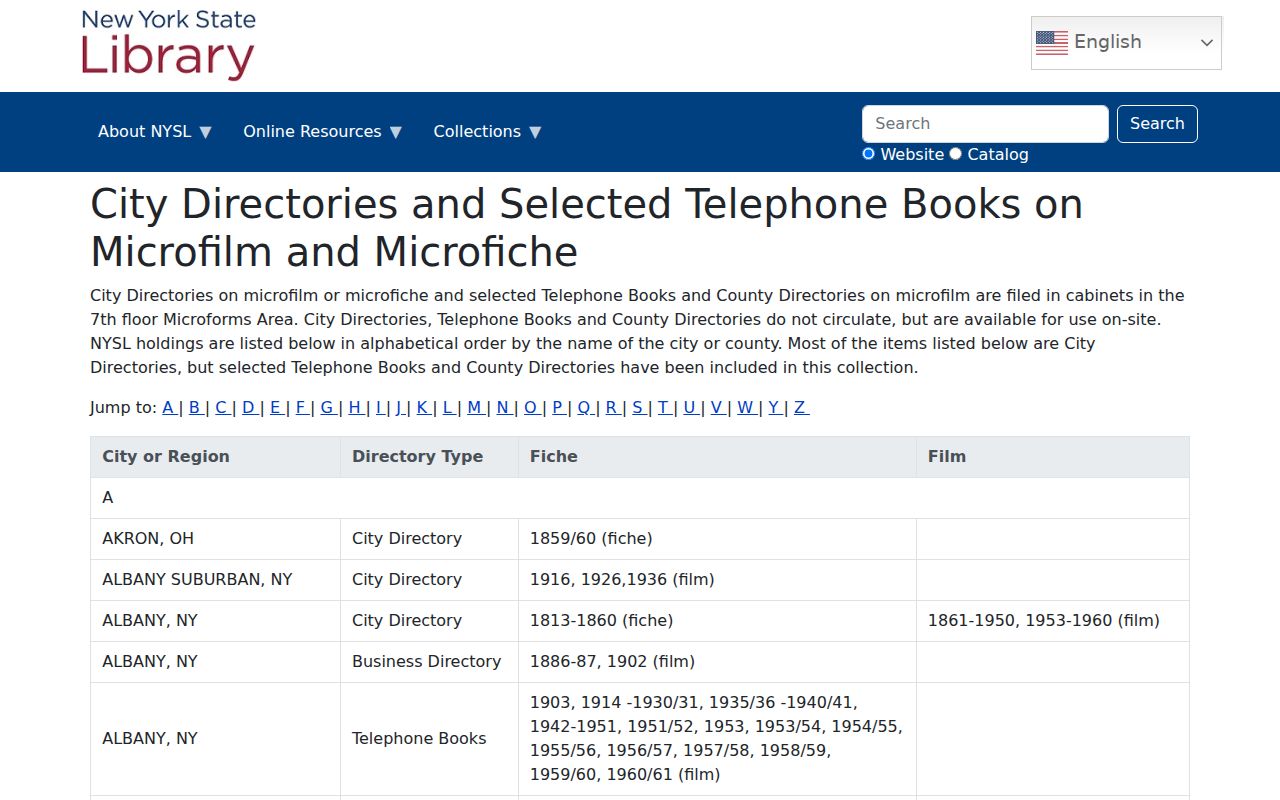
The holdings page helps you choose a year before a visit. Use it to plan microfilm requests or library help in advance.
Orange County Directory Research Help
A missing directory year does not end the hunt. The Newburgh Free Library can name a local volume or telephone book. OCGS keeps incomplete runs and a directory-of-directories to check. The Historical Society can help identify a collection or finding aid. Keep each request tight. Give one surname, one address, one date range, one municipality, and one likely repository.
Goshen Public Library handles local-history research at $15 per hour. Postage and $0.25 per copy are extra. That service suits town, village, and nearby-county history. It works when an Orange County city directory is only one strand of a family trail. Remember what these collections hold. They carry historical leads, not current household records.
Newburgh Directory Buildings Then and Now
A photograph can enrich a city directory result without proving residence, and the Newburgh Free Library collection on New York Heritage holds municipal, organizational, fire, church, and census material. It also includes 1916 assessment photographs and material on more than 1,300 Urban Renewal buildings photographed or documented in 1958-66. Search a name, street, church, or spelling variant. Then inspect the item metadata and the original record.
Old addresses vanish from modern maps. That is where a photograph earns its keep, anchoring a façade and streetscape for a particular period. A directory, parcel record, or deed supplies a separate trail. One caveat matters. A missing modern address alone does not prove the listed person moved.
The Orange County Historical Society collection page rounds out the local options. Use it for indexes and historical material.
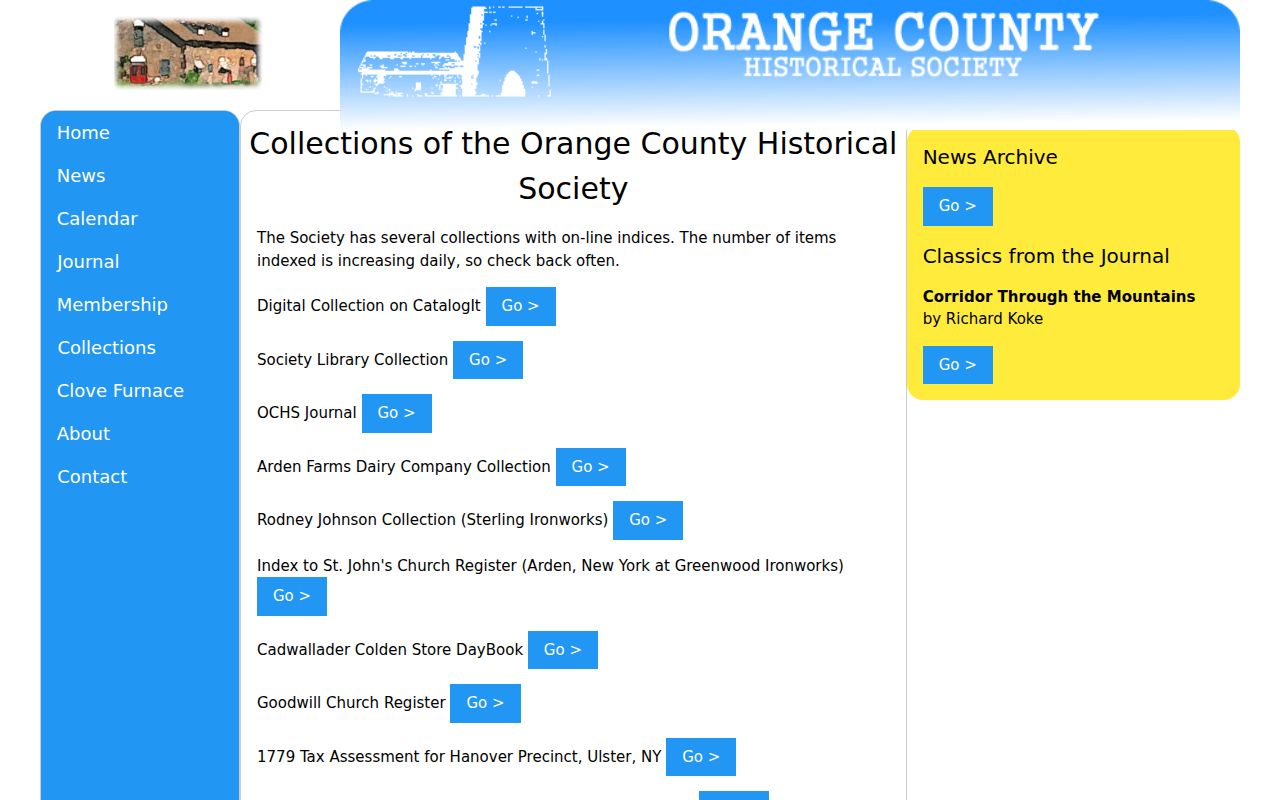
Treat every index as a lead, never a destination. When an entry connects to a directory address, request the underlying item or finding aid before drawing conclusions.
Trace Orange County City Directory Households
Track a household through Orange County city directories as a dated sequence, starting with a surname or address in one year you hold. Then move to the next real volume. Log the small things: street spellings, house numbers, spouse and widow notations, and every absence from the book. Pair the directory date with a census year, a newspaper item, a deed, a cemetery record, or a probate file. A gap stays a gap. Only a separate record can close it.
- Record the full citation and every printed field from the first directory entry.
- Search the next available edition, including name variants and the later street section when present.
- Compare the closest open federal census schedule. National Archives schedules through 1950 are available under the 72-year rule, while 1960 and later schedules remain closed.
- Test a departure against newspapers, deeds, cemetery sources, or an estate file instead of assuming a move.
- Use the County Clerk Record Room for Orange County census books from 1825-1875, which the county describes as held there rather than online.
Goshen's paid research service suits personal family-history work. It helps most when the missing clue is local history rather than a countywide index. Note: A directory disappearance can signal a move, a death, a changed listing practice, or simply an unheld volume.
Orange County Directory Gaps
Coverage in Orange County varies by place and year. Newburgh's runs reach back to the 1860s, OCGS reports incomplete area runs, and the J.H. Lant directory covered Middletown and Port Jervis for 1890/1-1892. No single list names the last printed year for every municipality. Leave an unlocated volume alone. An unbroken street address, a shared surname, or a telephone listing never proves that someone stayed put.
Digitization here is layered, not a single cutoff. County historical material, directory microfilm, newspaper reels, library files, and New York Heritage collections sit with different custodians and different access rules. One era may be scanned. The next may not be. The Orange County Record Room also holds state census books and historical series the county describes as physical research material. Record the year and the repository each time you compare results.
Historical directories shine for family and house history. A modern name finding needs independent confirmation from an official source suited to the record and date. The Orange County resident lookup workflow fits that task. Old records can be incomplete or plain wrong. Treat every finding as one clue among many rather than a settled answer.