
Finding Orange County Resident Records
No single official roll lists every Orange County resident. The trail splits across many desks. The assessor keeps one piece. The County Clerk, election officials, courts, municipal registrars, and historical repositories each keep a piece. An assessor result names a parcel owner. A recorded deed puts a grantor or grantee into a land transaction. A printed directory or an obituary can pin down an earlier address. Treat each one as a dated source rather than a full picture of a household.
Match two independent details before you treat two entries as the same person. A middle initial, a parcel number, a spouse, a date, or a prior address beats a name alone. That holds every time. Orange County makes this care necessary. City of Newburgh, Town of Newburgh, Town of New Windsor, and a Newburgh mailing label are four separate contexts. A bare name cannot tell them apart. An Orange County resident lookup serves you best when the goal is one person. A whole address is a different task.
- Search the county parcel route with an owner name, property address, tax-map number, or municipality.
- Use the map record to preserve the parcel or SBL identifier and distinguish the situs from the tax mailing address.
- Check SearchIQS or the Record Room for the related deed, mortgage, lien, map, or historical series.
- For a past household, ask a library or archive for the relevant directory, newspaper, census, or local-history collection.
- Send a narrow FOIL request only to the custodian that holds a defined record set when online access stops.
Note: A public record can back a research lead, yet it cannot prove every person now tied to an Orange County address.
Orange County Offices Behind Resident Records
Different Orange County offices keep resident records for different reasons. The County Clerk records land instruments, holds historical county series, and files many court papers. Parcel Information and local assessors manage the assessment side. Election records sit with the Board of Elections. A municipal registrar usually keeps the first copy of a local birth, death, or marriage record. Name the municipality and the record type together when you request anything.
Orange County Clerk Record Room
255 Main Street
Goshen, NY 10924
845-291-3287
Orange County Parcel Information
County assessment and tax-map route
Goshen, NY
845-291-2490
Orange County Board of Elections
75 Webster Avenue
Goshen, NY
845-360-6500
Orange County Parcel Records by Name
For an Orange County address, the county's Parcel Information route is often the quickest first stop. You can search it by owner name, address, tax map, or municipality. A result may link a parcel to assessment values and tax maps. It can also surface photographs, reports, and comparable-search tools. The official assessment roll can still live with the local assessor instead. Note the roll year and the municipality whenever a result bears on a current question.
| Owner name | Links a displayed owner to parcel records; test spelling and initials carefully. |
|---|---|
| Address | Searches the situs, or physical property address, rather than proving a current household. |
| Tax map or SBL | Supplies the stable parcel key used to bridge the map and a deed description. |
| Municipality | Separates similar street or place names across Orange County cities and towns. |
Keep the owner's mailing address and the situs separate in your notes. A tax bill can go elsewhere. An owner may never occupy the property. The fuller address workflow sits on the Orange County street directory page.
Current Orange County Directory Sources
Current Orange County resident-directory evidence depends on the source you pick. Parcel records answer questions about owners and land. Voter tools confirm limited registration details for one known registered voter. Recorded instruments document the parties to a transaction. State licenses and business filings can back up a public affiliation, though they never prove a household. The table keeps each of those questions apart.
| Orange County source | Record connection | Custodian | Access route |
|---|---|---|---|
| Parcel assessment record | Owner, parcel, situs, mailing address | County or local assessor | County-linked public search |
| Recorded-document index | Grantors, grantees, legal property trail | County Clerk | SearchIQS, Record Room, FamilySearch |
| Voter registration tool | Registration and poll-site confirmation | New York election officials | Known-voter lookup |
| Court and estate indexes | Parties, filings, estates, case dates | New York courts and Clerk | Portal plus clerk route |
| Local history collections | Earlier households, addresses, notices | Libraries and societies | Catalog, microfilm, research room |
Orange County publishes no countywide neighborhood membership directory and no public jail name roster. When a record is not posted, the honest next step is the named custodian of it, not a guess pulled from a commercial compilation.
| Orange County record route | Commercial people-finding category |
|---|---|
| Names the custodian, record type, and source date so a result can be checked. | Can combine public filings, marketing data, and address histories that may be stale or merge same-name people. |
| Offers a clerk, assessor, court, library, or agency route for a copy or correction. | Cannot replace the originating custodian or override confidentiality rules. |
Official material can still have gaps, but its source and its limits stay visible. Save the agency, the record date, and the identifier instead of trusting an unverified compiled profile.
Orange County Voter Search Boundaries
The New York voter lookup works as a confirmation tool rather than a search engine. It asks for county, last name, first name, date of birth, and ZIP code. A match can return registration, poll-site, and mail-ballot details for an eligible registered voter. A nonmatch might stem from spelling, timing, an address change, eligibility, or confidentiality. So it never proves that someone lacks an Orange County connection.
A countywide voter file is a different animal. New York Election Law §3-103(5) demands an elections-purpose statement for any voter-registration-data request. Election Law §5-508 shields protected registrations. The Orange County Board of Elections also posts election-district maps. Use a map to read the election geography. Never use it to turn a street into a household list.
Orange County Deeds as a Name Trail
The County Clerk's Online Records page opens two doors. One is SearchIQS. The other is free public computers in the Record Room. Deeds, mortgages, liens, judgments, maps, naturalizations, census books, and court papers do not share one equal online span. A remote SearchIQS account and document images carry the access costs the Clerk lists. For a historical book or a series missing from the interface, the physical Record Room remains the fallback.
Build an Orange County property trail with care. Record the document number and the recording date. Note the type, grantor, grantee, and municipality too. Add the legal description or parcel reference, the book/page or image link, and any prior-instrument cross-reference. The seller in one deed often becomes the next grantee when you work backward. Remember that a mortgage, an assignment, a satisfaction, or a judgment is its own document type. It does not automatically transfer ownership.
- Parcel
- A mapped tax unit that ties a situs address to an SBL, print key, or legal description.
- Grantor and grantee
- The transferring party and receiving party named in a recorded instrument.
- Index
- A finding tool that points to a record; it is not necessarily the complete image or certified copy.
- Criss-cross directory
- A directory section arranged by street and number instead of surname.
Orange County Court Search Routes
Orange County court records live on several state portals, each keyed to a case type. WebCrims covers selected criminal matters and future appearances. Its search fields include case type, court type, county, and an optional town-and-village-court setting. NYSCEF handles participating e-filed cases. Its guest search works by court, case number, party, or attorney. WebSurrogate covers estate files, with name, file, old-index, index-book, and will routes. Its name search requires a court plus a last or organization name.
Treat any docket hit as a corroborating record rather than proof of residence. Write down the case number, court, party role, date, status, and file instructions shown. Sealed, juvenile, adoption, and protected family matters may be unavailable. Older paper files sometimes require the County Clerk court-paper route instead of a portal. The New York WebCivil search opens a separate civil route. It starts from the official state entry page.
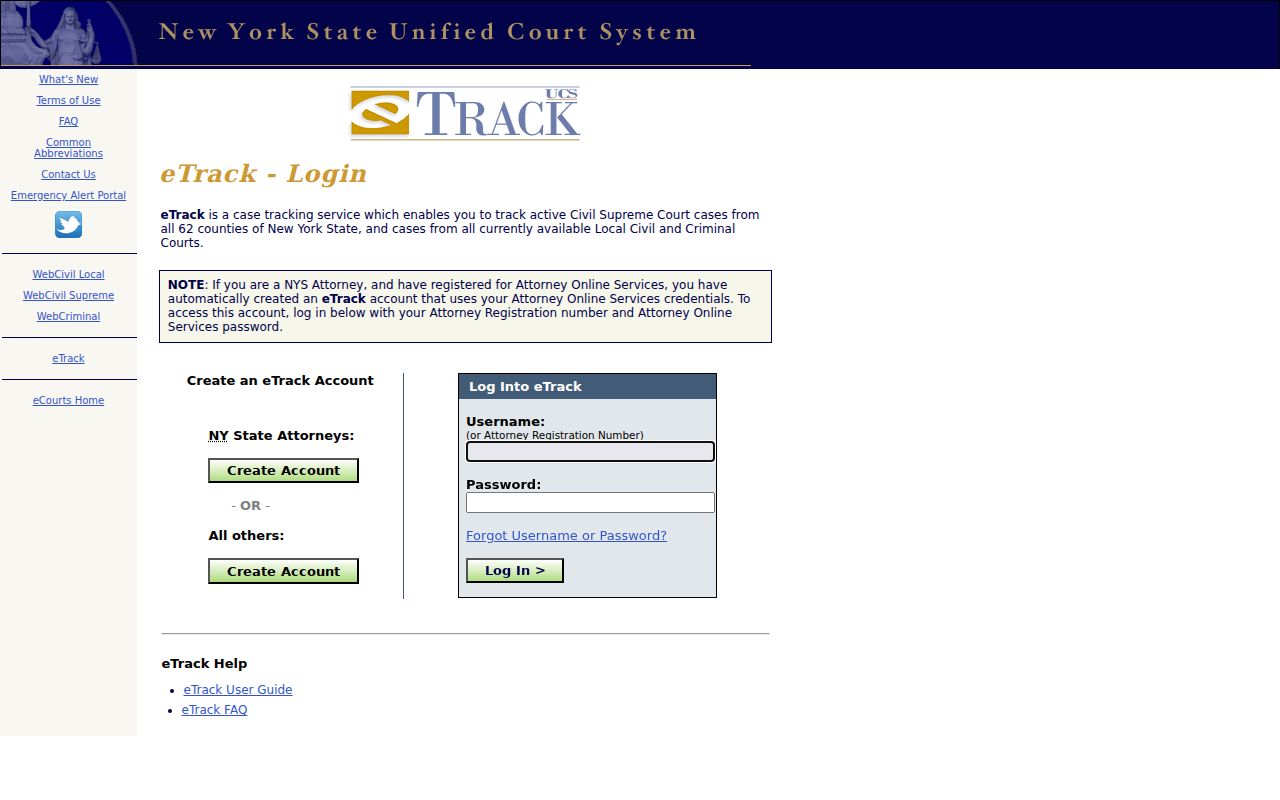
A court result is only the start. Bring the court name and party details to the right clerk to request the file, a copy, or a disposition.
Orange County State Record Checks
State agencies fill gaps that Orange County does not host. The Department of State runs entity and license routes. NYSED verifies professional licenses. The State Comptroller offers a free unclaimed-funds search by name, city, ZIP, or property ID. A filing or license can confirm a dated public affiliation. A service address or license location is not automatically a residence.
Custody information sits with the state and carries its own limits. The official NYS DOCCS lookup accepts a DIN or a name search with a birth year. It returns current or former custody details as the agency provides them. Orange County publishes no public jail name-search roster. The Corrections office or a narrow FOIL request is the local path for that question.
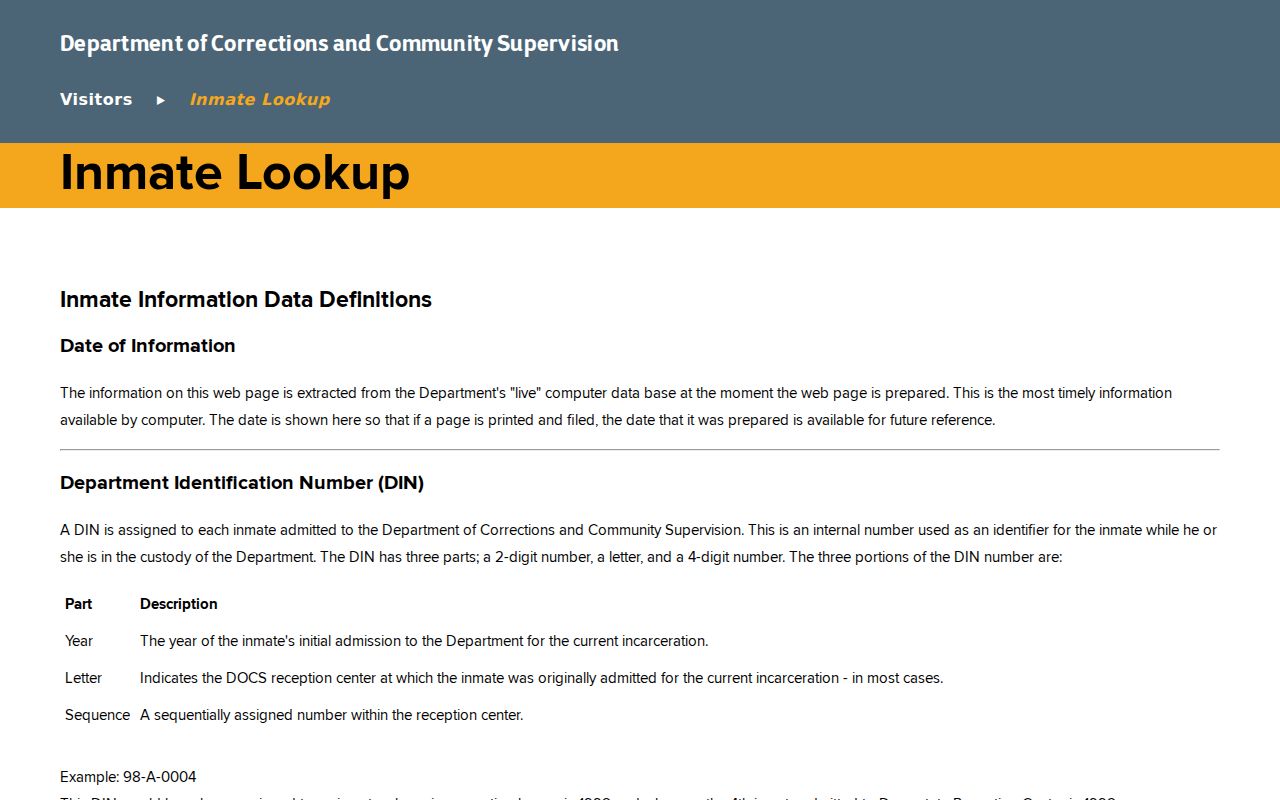
The state interface displays its own official search fields. Check the custody-status limitations attached to any result before drawing conclusions from it.
Orange County GIS Record Context
For parcel context around an address, Orange County GIS is the strongest public route. The tax-map program covers more than 142,000 parcels. Its tools search by owner, address, or parcel identifier. They then offer Identify, selection, layers, measure, and print controls. Fields such as PrintKey, SWIS, acreage, and section number tie the point on screen to an assessment search. They also link it to a deed search.
Remember that GIS is geographic context, not a certified deed or legal survey. Parcel polygons can be generalized. They can also be updated, and the public layer is not a complete owner database. Save the parcel key from the map. Then confirm the current display through the county assessment route. Also confirm the recorded legal description at the County Clerk. This matters most near City Newburgh, Town Newburgh, and Town New Windsor. There, a postal label can hide the relevant municipality.
Orange County Municipal Record Split
Some Orange County records start at the municipal office, not the county seat. A local clerk or registrar holds vital events and municipal certificates. A city or town building department may keep files by address. These can include permits, certificates of occupancy, and code files. Port Jervis, for instance, routes permits through its Building Department. Code enforcement, stop-work actions, and certificates of occupancy go there too. No countywide public permit index exists.
For a municipal request, supply the current and former address if known. Include the municipality, a date range, the parcel or SBL, and the specific permit or record type. Ask whether a public copy, an inspection, or a FOIL request is the right channel. A permit shows that work was proposed or completed. It is not a deed. It is not a complete household record.
Note: The right city, town, or village custodian often beats a broad countywide request for an Orange County address question.
Orange County Historical Directory Shelves
Historical Orange County resident records run deepest in local collections. Newburgh Free Library holds directories back to the 1860s. Its telephone books run from the 1930s through the early 2000s. The Newburgh Historical Society notes that pre-1918 directories are generally surname-alphabetical. Later volumes can be searched by address and surname. OCGS, the State Library, the County Historical Society, and Goshen Public Library fill gaps for other municipalities and years.
A historical entry can show a name, spouse notation, occupation, and address. It may include a renter or owner mark and an abbreviation key for its printed year. It cannot establish a modern household. New Heritage's Newburgh collection adds 1916 assessment photographs and material from the 1958–66 Urban Renewal record. This is useful when a building or street context changed. The Orange County city directory collections take a detailed volume-by-volume approach.
A court, county, naturalization, or historical record may need a bigger repository. Start an archival search through the New York State Archives.

A name search sometimes comes up empty in an online catalog. Give the catalog terms, locality, record group, and date range so an archive request stays reproducible.
Orange County Vital Record Rules
Vital records work differently from the property rolls and voter rolls that fill a residents directory. Those rolls sit in county offices. Vital records follow another path. For a birth, death, or marriage, the registrar in the city, town, or village where the event took place is the first custodian. The New York State Department of Health issues eligible statewide copies. These copies cover events outside New York City. The County Clerk keeps no birth certificates and files no marriage licenses. A county address alone will not carry you there. The municipality where the event occurred controls the local route.
Genealogists get a break under state rules. Birth records open after 75 years when the person is known to be deceased. Death records open after 50 years. Marriage records open after 50 years when both spouses are known deceased. Direct-line exceptions apply, and proof requirements are attached. Certified copies follow separate eligibility, identification, fee, and processing rules. A certificate, a residents directory entry, and a court judgment are three different things.
Orange County Privacy Boundaries
Not every Orange County lookup runs to the end. Some paths stop by law. New York's Address Confidentiality Program can give eligible participants a substitute mailing address. Confidential voter registration carries its own protection. The federal Driver's Privacy Protection Act restricts DMV personal information. Vital records, sealed court matters, juvenile files, utility records, private delivery data, and unposted organization rosters also sit outside any public residents directory.
Fixing an error starts with the agency that holds the record. Keep the source URL, the access date, and the exact disputed field, then ask the custodian to amend or annotate it. A FOIL request cannot override a statutory confidentiality rule.
Orange County Fraud-Alert Clue
Orange County offers a free IQS deed and mortgage fraud-alert route. Subscribe and it notifies you when a deed or mortgage is recorded under your name. The Clerk adds a caution. People who share a name can trigger misleading alerts. An alert is a prompt, not proof. Pull the document number, municipality, legal description, and image with the County Clerk. Draw conclusions only after that.
The same wariness applies to deceptive deed-copy letters, phony court demands, and surprise fee requests. Reach the real custodian through its published phone number or link. Never use the contact details inside an unsolicited message. Registry information stays public only at the level the law permits. The official New York registry search shows that plainly.
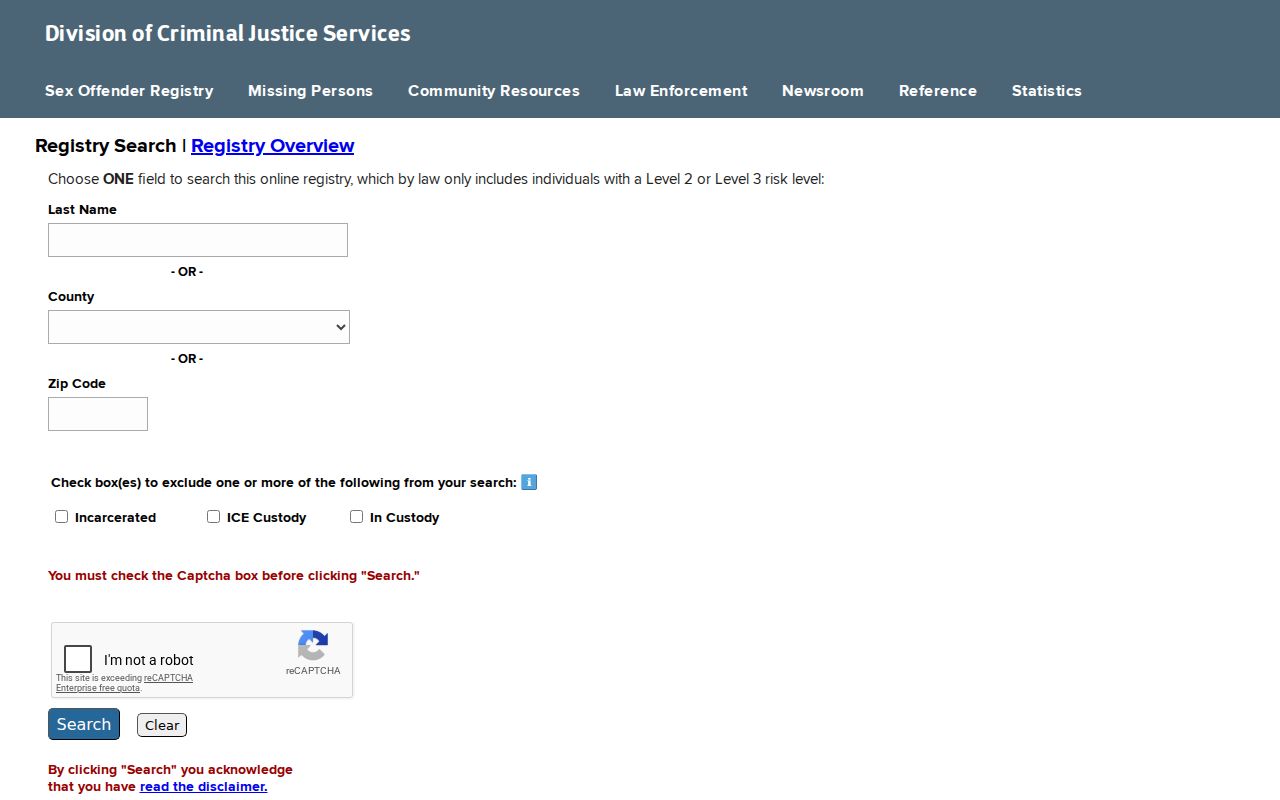
The interface serves a regulated public-safety purpose. It must never be used to threaten, harass, or track a person.
Orange County FOIL Request Route
Orange County material is not always online. A focused county FOIL route is the next step. Name the existing record set and the date range. Give the municipality and any known name or address variation. Say whether you want electronic or paper delivery. Ask for segregable portions and a written explanation for anything withheld. Municipal permits and clerk files belong with the city, town, or village custodian instead.
New York FOIL is Public Officers Law Article 6, §§84–90. Under §89(3)(a), an agency generally must respond within five business days. It can grant, deny, or acknowledge a request in that window. More time triggers a meaningful estimate. Appeals run on their own deadlines. FOIL reaches records that already exist. It is not a command to build a new list or unlock protected material.
The county's FOIL page documents the official request route and appeal information.
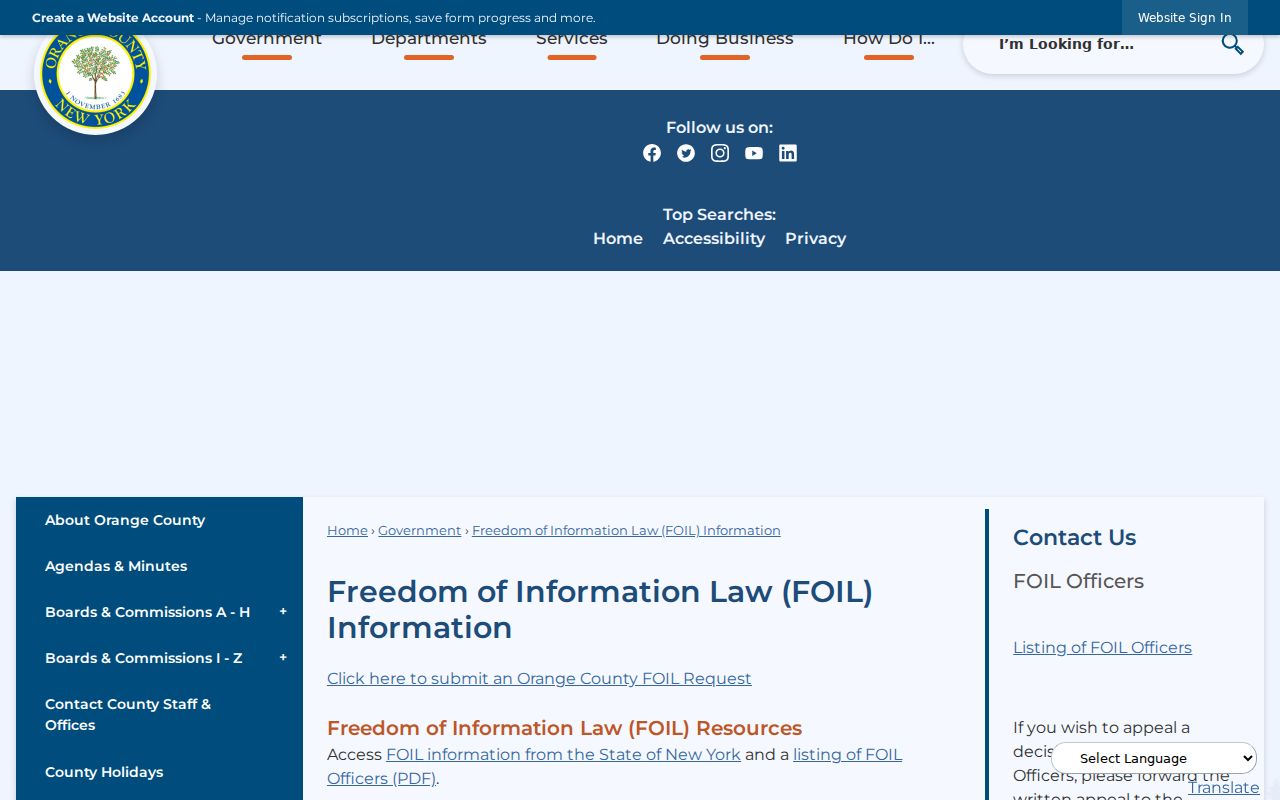
A narrow request aimed at the proper office is more likely to reach the record keeper who can explain the available access channel.